daunting challenges faced by democracies around the world stem, to a large extent, from attempts to shift power away from old elites.
Reprints from THE JERUSALEM POST; BY GOL KALEV, august 17, 2023

Yellow vest protesters in Toulouse (Occitania), 8 December 2018 (Wikepedia)
The weekly Torah portion, Shoftim, Judges, begins with a commandment, “Judges and officers you should give yourself in all your gates, which the Lord thy God give you, tribe by tribe; and they shall judge the people with righteous judgment.”
Indeed, since then, there has been a broad buy-in into a world-order based on rules, with officers that execute them, and judges who judge the people.
The only question is who are those judges?
For most of human history, it was clear that the rules are that of God, and the judges directly or indirectly judge based on God’s will.
Such was the case in Europe until at least the late 18th century, and mostly through the mid-20th century, operating under the system of Divine-right-Monarchy in the belief that God chose the Monarchs, and they performed God’s will.
Such was also the case in Jewish communities during that time, guided by the Halacha (Jewish Laws), with rabbis and dayanim (“rabbinical judges”) leading the community and judging its people.
Yet, in recent centuries, there has been a swift departure from this notion, with the introduction of secular democracy. The rulers are no longer appointed by God, but by the people, and the judges base their decisions on laws legislated by humans, not by God.
This new experiment is now facing unprecedented challenges in various global arenas, the keys to which is the question: What are the rules and who are the judges?
Once again, Zion is at the epicenter of an emerging debate, and the world is watching, just as it looked up to innovations and global trend-setting that came out of Zion throughout history.
Levis as a light-upon-the-nations (Judaism 1.0)
The question of who the elite are is dealt with in the Torah itself, when a shift occurs in the nascent nation of Israel’s power structure, moving from the first-born to that of a new elite, the Levites.
The system of firstborn was not only used in Israel. We learn through Laban in the book of Genesis that it was used by local nations as well.
And yet the shift to a new elite in Israel was emulated by other nations. It became acceptable that priests, not the firstborn, were in charge.
Another application of the concept of Judaism as a “Light unto the Nations” occurred over 1,000 years later, with the spread of monotheism.
Monotheism as a light-upon-the-nations (Judaism 2.0)
Jewish monotheism was spread to pagan Europe in the form of Christianity, and later to the Middle East in the form of Islam. And so, the specific mission set by Judaism to spread light unto the nations through monotheism has been fulfilled.
Yet, Theodor Herzl concluded that it was time for Jews to spread a different type of light upon the nations. He wrote in 1895: “God would not have kept us alive so long if there was not a role left for us to play in the history of mankind.”
That light has been spread through the Zionism that he fathered. Indeed, innovations produced in the Jewish state Herzl envisioned advance humanity, such as medical breakthroughs, new technologies, safety innovations, productivity, and lifestyle advances.
However, one of the biggest contributions of Zionism to humanity might be in the works today in 2023, as Israel deliberates proposed changes to its power structure.
Zionism as light-upon-the-nations (Judaism 3.0)
Herzl understood that democracy without an elite is problematic, and hence advocated a system of “aristocratic republic.” Yet, he did not define that aristocracy.
Indeed, the daunting challenges faced by democracies worldwide stem, to a large extent, from attempts to shift power away from old elites. This manifests in New York/Los Angeles vs “flyover country,” in Paris vs France, and more broadly around the world in what some call culturally “White vs Brown.”
While much of the debate around the world is theoretical, in Israel it is “live.” Indeed, Israel has turned into the world’s laboratory experiment.
The Israeli elite arose in the 1930s, when an adamantly secular party led by David Ben-Gurion, later the Labor party, won elections to Zionist institutions, and then consolidated power, wielding control over government institutions, the media, the education system, the economy, business, and the Zionist ethos. Israel was ruled in an l’etat c’est nous (“the state is us”) type of way.
This tight control worked. Thirteen years after Ben-Gurion’s party took over Zionism, the Jewish state was established.
But in 1977, came Labor’s shocking election defeat. Forty years at the helm came to an abrupt and traumatic end. Since then there has been a gradual shift of power, accompanied by natural resistance, from the secular minority to the religious/traditional majority, and from Tel Aviv – or more specifically the neighborhood of Ramat Aviv, home to four of the five center-left prime ministers since the late 1960s – to Jerusalem.
Israel is again on the global stage as another round in this long-term shift of power is unfolding.
“The first part of your plan to weaken Israeli supreme court passed into law,” CNN presenter Wolf Blitzer said as he opened his interview with Prime Minister Benjamin Netanyahu.
That first part, the canceling of the reasonableness clause, was triggered by the Supreme Court’s overruling of Netanyahu’s appointment of Aryeh Deri, leader of the Sephardi Shas party, to a ministry in his government.
The court ruled that such appointment was unreasonable, given a plea-bargain Deri made related to tax offences, which included his resignation from the previous Knesset, and ambiguity about his intentions to return to politics.
Sephardi religious Shas voters felt disenfranchised. To them it is perfectly reasonable for the leader of a party, which won nearly 10% of Knesset seats, to be allowed into the government, especially given his rich ministerial experience.
Their sense that the court has repeatedly overreached its power to their detriment was only aggravated when former chief justice Aharon Barak explained that Sephardis (culturally analogous to “Brown” in Israel), are radically underrepresented in the courts because someone said “we could not find a [suitable] Moroccan judge.”
Blitzer apparently believes that changing the composition of the court or defining its mandate, weakens it. While this is a legitimate view, such an argument is akin to reporting that the ascent of the Levis is weakening the nation of Israel, or the ascent of Christianity is weakening Europe (both legitimate views).
Herzl said “elite,” but was careful to not specify who the elite should be. God said “judges,” but did not specify who they should be.
Whether one supports or opposes the proposed legal reforms, the debate in Israel is not only a legitimate one, but also a testament to a thriving society.
Israeli Jewish society is rooted in the ideological bedrock of Zionism, which allows debates like this to be argued passionately, yet safely. Indeed, both sides of this debate walk with Israeli flags and view their side as doing the right thing for Zionism and for democracy.
The world is witnessing a debate in Israel that is based on content, with a highly engaged population that is well-informed, passionate, disciplined to their side’s messaging, and highly patriotic.
The aggressive and heavily-funded campaign perceived to incite Israelis against one another has utterly failed. While similar debates around the world – from Paris to New York – are characterized with violence and disdain to the other side, most Israeli protesters are guided by the principle of mutual assurance.

Blitzer proceeded to highlight the damage that, in his view, the debate causes to Israeli society, economy, military, relations with the United States and stability with the Palestinians.
Yet, in reality one needs to also recognize that the way the debate is deliberated, as well as its future outcomes and lessons are once again, rays of light beaming from Zion, from which the world’s nations are set to benefit, as they go through similar deliberations.
The writer is author of Judaism 3.0 – Judaism’s Transformation to Zionism (Judaism–Zionism.com). For his geopolitical analysis see: EuropeAndJerusalem.com
CLICK FOR THE PDF OF THE MAGAZINE
More on global trends that impact the state of Judaism in Gol Kalev’s book: Judaism 3.0: Judaism’s Transformation to Zionism
Recent article: Recipe for European disaster
More geopolitical articles on: Europe and Jerusalem
Jerusalem Post Special Magazine: Are we in Judaism 3.0?:

Related Jerusalem Post articles by Gol Kalev
The implications of Judaism 3.0:
This generation’s existential threat to Judaism
Applying Herzl’s thinking to counter Israel-bashing

Occuptionalism: The new form of Colonialism is hijacking the Palestinian cause
Occupationalism is enabled by the Jerusalem-based “Conflict Industry,” known for its lavish parties, insularity, high turnover and its own social hierarchy

European blood libels continue, but now there is a solution
Recognizing that we are in Judaism 3.0 would address existential threats to Judaism, but it would also provide Jewish clarity that would advance humanity

Judaism 3.0: Turning threats to Judaism into enablers of its survival
Like antisemitism in Herzl’s time, today’s Israel-bashing and assimilation of American Jewry also have hidden assets in them

Passover to Shavuot and the American-European divide
How the transition affects today’s geopolitics, the flaws of democracies and the emerging rift: Americanism vs. Europeanism

Threat to Judaism through friends, influenced by Israel-bashing movement
Applying Herzl’s thinking, the threat to Judaism might come through our friends. Such Israel-bashing-light was showcased in the Basel Zionism celebrations in 2022

A broad recognition of Judaism 3.0 would release the Arabs of the Middle-east from debilitating European dogmas that have occupied their true character for the last 100 years

See in Link: Applying Judaism 3.0 to the countering Israel-Bashing
See also The Jerusaelm Report 2022 New Year Magazine: Judaism’s transformation to Zionism – Countering the Israel-bashing movement
Recognizing that Judaism has transformed would rob the Israel-bashers of their starting point: The premise that Judaism is merely a religion.

Summary of above articles:
Gol Kalev shows how Israel-bashing is today’s existential threat to Judaism, having both a populous dogmatic retail component – Occupationalism, and institutional destruction mechanisms that deploy modern-day blood-libels. In such circumstances, Hasbara (Israeli PR) is futile. Yet, a broad global recognition that Judaism has transformed to Judaism 3.0, and Zionism is now its anchor, would dramatically mitigate the threat.
Related. Jerusalem Post Magazine Cover-articles by Gol Kalev:: EUROPE & JERUSALEM
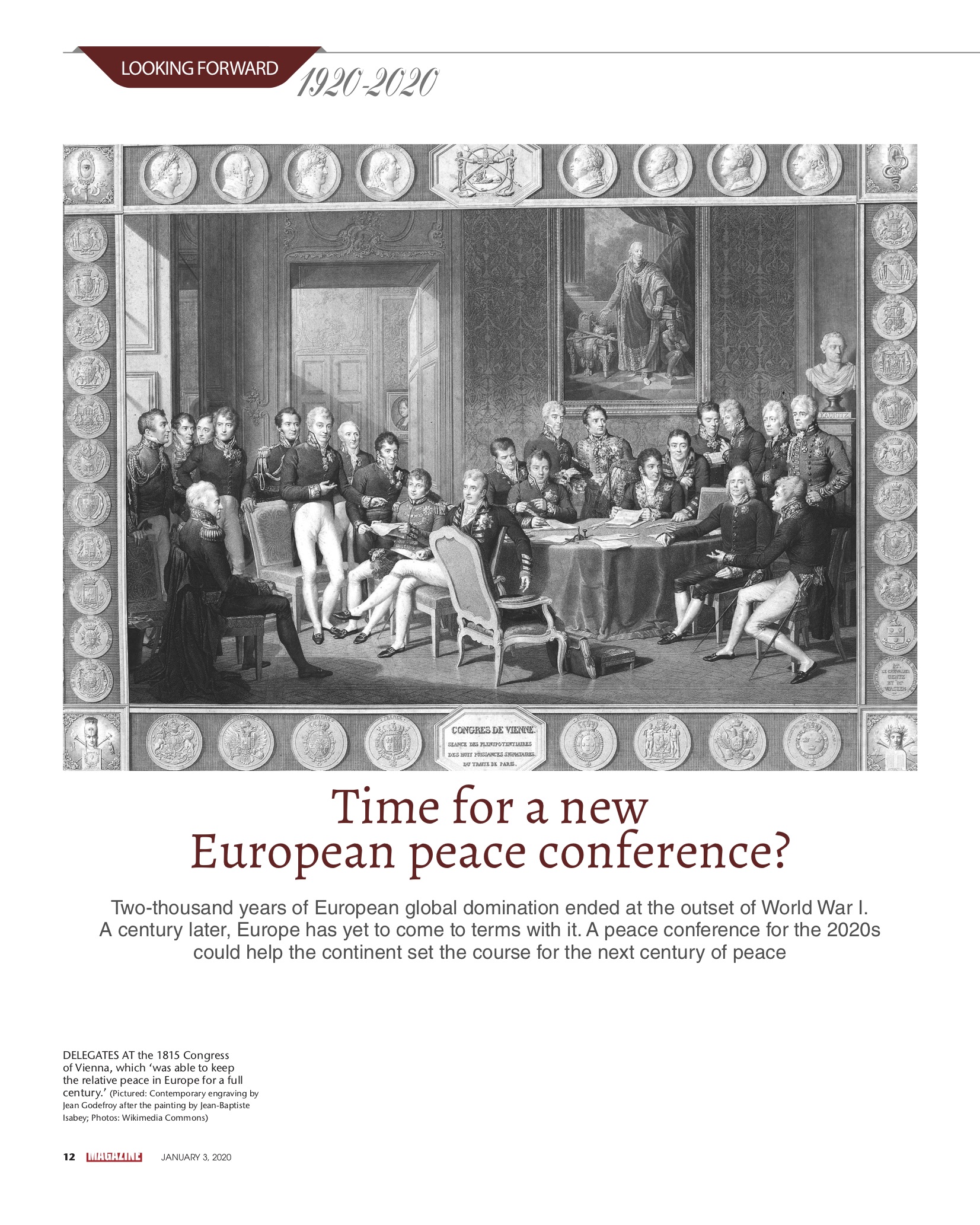

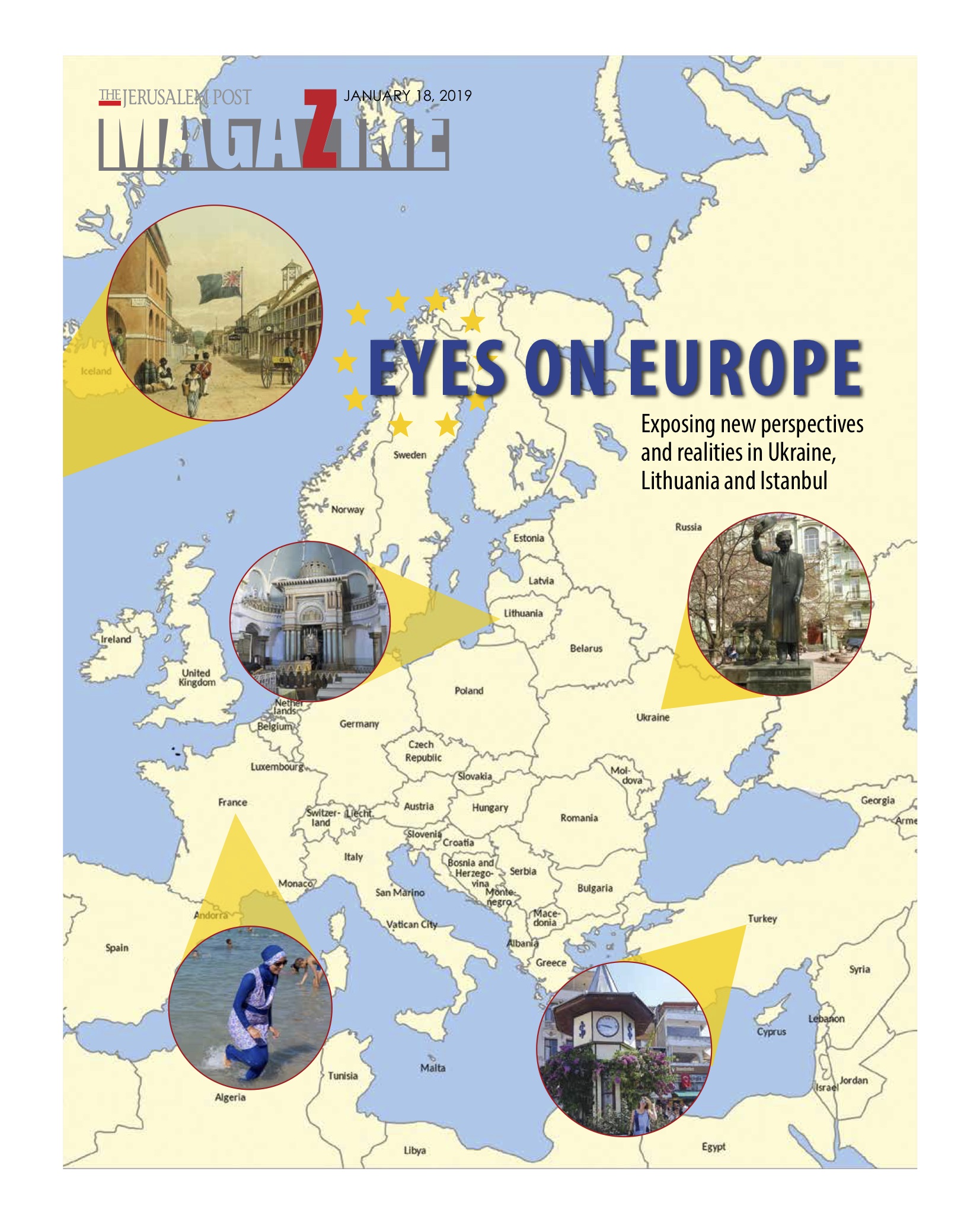


The resurfacing of European Colonialism
Hijacking the Palestinian cause
European opposition to the Jewish state
Time for a new European peace conference
Europe should benefit from Herzl’s vision
Related: Applying Herzl’s thinking to today’s issues
Herzl can help solve today’s strategic issues
For inquiries/comments: info@europeandjerusalem.com
Sign-up to our mailing list:


Gol Kalev’s book: Judaism 3.0: Judaism’s Transformation to Zionism

Watch Gol discuss his new book in an i24 interview
Praise for Judaism 3.0
“Gol Kalev does not just know Theodor Herzl – he lives and breathes Theodor Herzl…This book should trigger the conversation the Jewish community needs about Israel, Zionism, Judaism and Identity. Bravo!”
Professor Gil Troy, author – The Zionist Ideas
ייA remarkable ideas book that is about much more than the state of Judaism…One of the most important books about Judaism, Zionism and global trends of our times.”
Catherine Carlton, former Mayor of Menlo Park, Silicon Valley tech entrepreneur
“This book should play an important role in the discussions about the future of world Jewry and its relations with Israel.”
Natan Sharansky, former Chairman of The Jewish Agency, former Deputy Prime Minister of Israel
“Gol Kalev’s book has the merit to transform the very essence of the State of Israel to becoming an objective expression of Jewish identity“
Dr. Georges Yitzhak Weisz, author – Theodor Herzl: A New Reading
“This book has sparked as much conversation as it has because the premise is so interesting, so counter-intuitive and demand of us that we think many thing anew. That is perhaps the greatest gift a book can give.”
Dr. Daniel Gordis, author – We Stand Divided
“Fresh new thinking about the relationship between Judaism and Israel. Kalev picks up where Herzl left off…A must read for people of all religious and political backgrounds who want to get a deeper understanding of the state of Zionism and Judaism today.”
Fleur Hassan-Nahoum, Deputy Mayor of Jerusalem
“A courageous thesis that must be part of any serious discussion of the future of Israel and the Jewish people.”
Michael Oren, historian, former ambassador of Israel to the United States
About the Author: Gol Kalev is a former Wall Street investment banker who has been researching Herzl and Zionism. Growing up in Tel Aviv and serving in the Israeli army, he then lived in New York and now resides in Jerusalem. He also spent time in various European cities and has traveled through both the American and European countryside, learning about contrasting world-views.
He is chairman of The AIFL Think Tank, which explores Zionism and Judaism, and has been writing analysis articles about Zionism, Europe, and global affairs for the Jerusalem Post, Jerusalem Report, Israel Hayom, The Daily Wire, The Media Line, Newsweek and Foreign Policy.
He has been praised for his unique understanding of Judaism by people throughout the political and religious spectrum. In this book, he delivers the state of Judaism as he sees it: Zionism as the anchor of Judaism.
Visit the Judaism 3.0 website: Judaism-Zionism.com
Mazo publishing is offering organizations and companies who wish to purchase 100 copies or more, a special edition of Judaism 3.0 with a dedication page. For information:

