perhaps it is the protest that did not happen that serves as a primary contributor to today’s situation: the “music revolution” of the 1990s.
Reprints from THE JERUSALEM POST; BY GOL KALEv, september 29, 2023

Elul, the last month of the Jewish year, was marked with two mass-crowd events: The ascent of Israelis of all political and religious backgrounds to Jerusalem, and the intensifying of protests against the government’s judicial reform (or “revolution,” as dubbed by protesters).
What was the origin of this year’s protest? Many Israelis on both sides agree that it was not just the judicial reforms. Some point to the long reign of Prime Minister Benjamin Netanyahu; others to built-up frustrations that the “1977 revolution,” as it is known in Israel – the victory of the Menachem Begin-led Likud, which ended decades of Labor Party rule – is not ending, notwithstanding episodic breaks.
Indeed, during those 46 years there were anti-government protests for various reasons: The Lebanon War in the early 1980s, alleged corruption in the early 1990s, cost-of-living increases in the early 2010s, and Netanyahu’s refusal to resign when he was indicted for corruption in 2020.
But perhaps it is the protest that did not happen that serves as a primary contributor to today’s situation: the “music revolution” of the 1990s.
Until then, Israeli radio would only play “proper” music, like that of Shlomo Artzi and Shalom Hanoch, excluding Sephardi/Mizrahi Middle Eastern music. With nearly half of Israeli Jews of Sephardi heritage, the demand led to the emergence of the “cassette industry” centered around the Tel Aviv bus station. There, people could purchase Sephardi music that the radio stations weren’t playing.
In the decades that followed the “1977 revolution,” there were no significant changes to the composition of non-government centers of power such as the media, academia, judicial, and civil service. But there was one area in which there was a major change: music! Starting in the 1990s, radio stations began playing Sephardi singers such as Zohar Argov and Zehava Ben.
This, some argue, led to two developments: Middle Eastern Sephardim were not properly “Ashkenazied” (“Europeanized”), and Ashkenazim were influenced by Sephardi Middle Eastern music, along with its religious themes and alleged shallowness.
As one prominent and highly respected politician at that time reflected: “Instead of us conquering Tul Karem, Tul Karem conquered us” (referring to the Palestinian city; he later apologized).
Fast forward 30 years, and one can see today the consequences of the music revolution and the religious themes that accompanied it.
The music revolution: From the clubs to the synagogues
In 1982, the song of the year was Benzin’s “Friday” (“Yom Shishi”), in which the Israeli rock band described the week-long anticipation, day-by-day, to Friday night, when there is a party and “we stay all night till the next morning.”
By 2019, the theme of this song was adapted (or hijacked) by Omer Adam. Same anticipation, day-by-day, to Friday night – yet not for the party but for Shabbat! Adam’s religious-oriented song has over 13 million YouTube views – about 10 times as much as the original secular version.
Another popular 2021 song, “I live from Shabbat to Shabbat,” by singers Subliminal and Amir Benayoun, describes how time passes slowly until Shabbat – “the light that lights up my all life.”
What a long journey the Zionist ethos has made through music: from parties in clubs during the 1980s, to the prayers in synagogues in the 2020s.
Had protests been held in the 1990s to stop the “music revolution” with the same vigor, organization, funding, and foreign pressure we see today, perhaps we would never have gotten to the judicial revolution. The public sentiment and voting patterns would have been different had it not been “conquered by Tul Karem.”
But the music revolution happened, and its consequences were on high display 30 years later, during the month of Elul in Jerusalem.
Jerusalem in music
In Tel Aviv during this month, attempts to radicalize protesters accelerated. Bus stops and street signs throughout the city showed a fist with the word “Resist,” some showing fire and flames. “Resist 255 messianic dictatorship laws,” read the signs. It’s not clear if we are meant to resist the Messiah or laws accelerating his arrival.
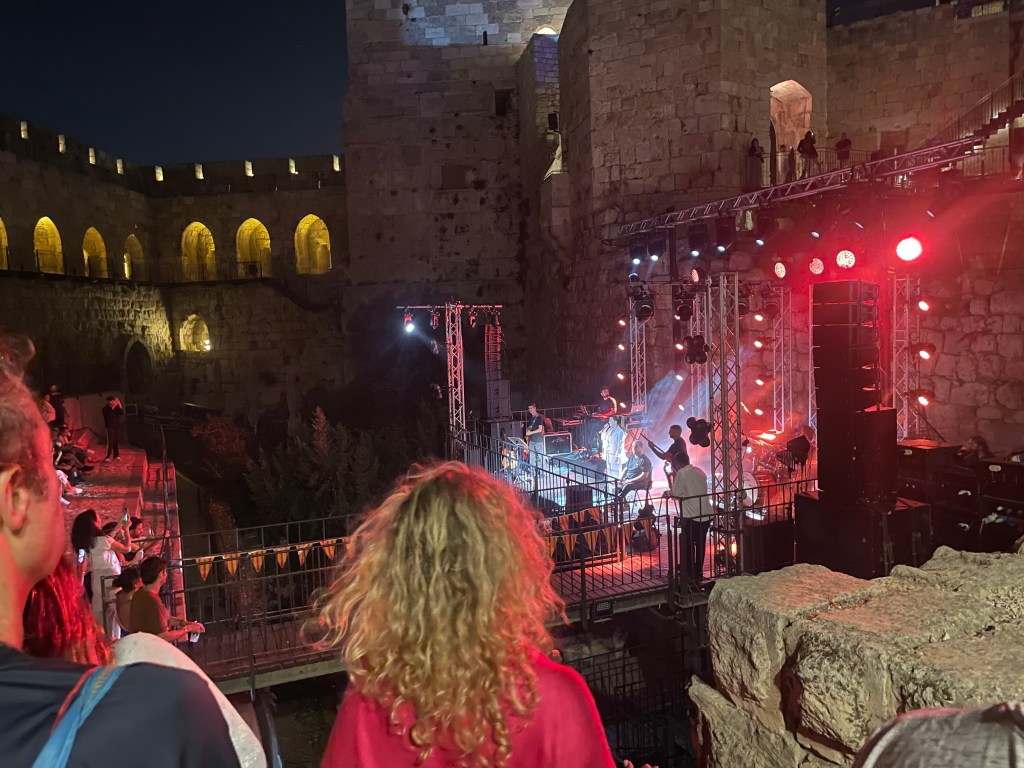
Yet in Jerusalem, as the month of Elul was about to start, a party was held at the Tower of David. Zehava Ben, the Mizrahi singer whose glass ceiling 40 years ago would have been the outskirts of the central bus station, was now on center stage at one of the world’s most stunning citadels, energizing the crowd that included protesters and supporters of the judicial reform alike; those who are secular and religious: “God just give me a bit of luck,” she sang.
Two weeks later, the music revolution was on display again at the Jerusalem Beer Festival, which attracts thousands of people, including those from Tel Aviv. The crowd was dancing to the hassidic music of haredi singer Shuli Rand. Something unthinkable in the 1980s.
While in 1982 the song of the year was Benzin’s “Friday,” in 1985 it was the sacrilegious song “Waiting for Messiah” by Shalom Hanoch: “Messiah is not coming, Messiah is also not phoning.”
Rand surprised the audience by performing this song, making reference to the late religious philosopher Yeshayahu Leibowitz, who said that the messiah is not someone who is here but something you aspire to (akin to an asymptote function, or in the words of Shlomo Artzi in his song “Hardufim”: “Both you and I will not get there in most likelihood.”)
While Adam took the theme of “Friday” and gave it a religious spin, haredi singer Rand did not even bother. He kept the song as is, and just changed its meaning.
As Rand was performing in Independence Park, a short walk away in Sultan’s Pool was a performance by Artzi, the legendary secular singer, loved by Israelis for more than 50 years.
With the backdrop of the Old City walls, Artzi sang, “No, no, I will not give up on you,” echoing the words of prophets who lived inside the walls 3,000 years earlier, and of the Torah itself: We might be at the bottom of spirituality, in exile, in grief, in despair, in darkness, but God promised us: He will never give up on us. Similarly, Artzi intoned in another song: “In remote control, I stare from afar. I will not let you go until the love returns to us.”
Change is hard, and so are domestic rifts that come with it, but the music revolution and its consequences underscore that Israelis – demonstrating or supporting – are a nation of believers!
Two weeks later, as Elul and the year were coming to an end, religious singer Ishay Ribo performed at the same venue. Now the lyrics were no longer latent nor subject to interpretations. These were deeply religious songs that touched the souls of the crowd of secular, religious, protesters, supporters, Mizrahim, Ashkenazim (in Menachem Begin’s words: Jews!) – those at Sultan’s Pool, and those watching from above.
Ribo finished his Sultan’s Pool concert, which also concluded the month of Elul and ushered us to the new year, with the final line of his flagship song: “Happy is the nation in which God is its lord.”
The writer is the author of Judaism 3.0 – Judaism’s Transformation to Zionism (Judaism-Zionism.com).
Related: All eyes on Israel as the judicial reform debate foreshadows global shifts
Judaism 3.0 debate: From Tel Aviv to Jerusalem – Zionism’s religious revival
CLICK FOR THE PDF OF THE MAGAZINE
More on long-term shifts in Israel in Gol Kalev’s book: Judaism 3.0: Judaism’s Transformation to Zionism
Article’s Soundtrack
(In order of appearance in the article)
Pre- Music Revolution
1. Friday (Yom Shishi) – Benzin (1982)
2. Waiting for Messiah – Shalom Hancoh (1985)
Post- Music Revolution
3. Yom Hashishi (Genesis 1:31) – Omer Adam (2019)
4. I live from Shabbat to Shabbat – Subliminal and Amir Benayoun (2021)
5. Waiting for Messiah – Shuli Rand (2021)
6. God, just give me a bit of luck – Zehava Ben (1992)
Shlomo Artzi
7. Hardufim (1982)
8. I will not give up on you (2016)
9. The old Love (1996)
Yishai Ribo
10. Seder HaAvoda (Yom Kipur prayers) – (2019)
Related musical article: The song Oof Gozal as a subconcius Midrash for Sefer Dvarim?
Recent article: Recipe for European disaster
More geopolitical articles on: Europe and Jerusalem
Jerusalem Post Special Magazine: Are we in Judaism 3.0?:

Gol Kalev argues that Judaism is going through a historic transformation and Zionism is becoming its anchor (Judaism 3.0).
Increasingly, both Jews and non-Jews relate to Judaism through the prism of Zionism and Israel, in positive and negative alike.
This has far reaching implications, including in countering new existential threat to Judaism
Watch the recent Judaism 3.0 discussion: Anti-Zionism as the new Anti-Semitism
Gol explored this aspect of his thesis in a Jerusalem Post series
The implications of Judaism 3.0:
This generation’s existential threat to Judaism
Applying Herzl’s thinking to counter Israel-bashing

Occuptionalism: The new form of Colonialism is hijacking the Palestinian cause
Occupationalism is enabled by the Jerusalem-based “Conflict Industry,” known for its lavish parties, insularity, high turnover and its own social hierarchy

European blood libels continue, but now there is a solution
Recognizing that we are in Judaism 3.0 would address existential threats to Judaism, but it would also provide Jewish clarity that would advance humanity

Judaism 3.0: Turning threats to Judaism into enablers of its survival
Like antisemitism in Herzl’s time, today’s Israel-bashing and assimilation of American Jewry also have hidden assets in them

Passover to Shavuot and the American-European divide
How the transition affects today’s geopolitics, the flaws of democracies and the emerging rift: Americanism vs. Europeanism

Threat to Judaism through friends, influenced by Israel-bashing movement
Applying Herzl’s thinking, the threat to Judaism might come through our friends. Such Israel-bashing-light was showcased in the Basel Zionism celebrations in 2022

A broad recognition of Judaism 3.0 would release the Arabs of the Middle-east from debilitating European dogmas that have occupied their true character for the last 100 years

See in Link: Applying Judaism 3.0 to the countering Israel-Bashing
See also The Jerusaelm Report 2022 New Year Magazine: Judaism’s transformation to Zionism – Countering the Israel-bashing movement
Recognizing that Judaism has transformed would rob the Israel-bashers of their starting point: The premise that Judaism is merely a religion.

Summary of above articles:
Gol Kalev shows how Israel-bashing is today’s existential threat to Judaism, having both a populous dogmatic retail component – Occupationalism, and institutional destruction mechanisms that deploy modern-day blood-libels. In such circumstances, Hasbara (Israeli PR) is futile. Yet, a broad global recognition that Judaism has transformed to Judaism 3.0, and Zionism is now its anchor, would dramatically mitigate the threat.
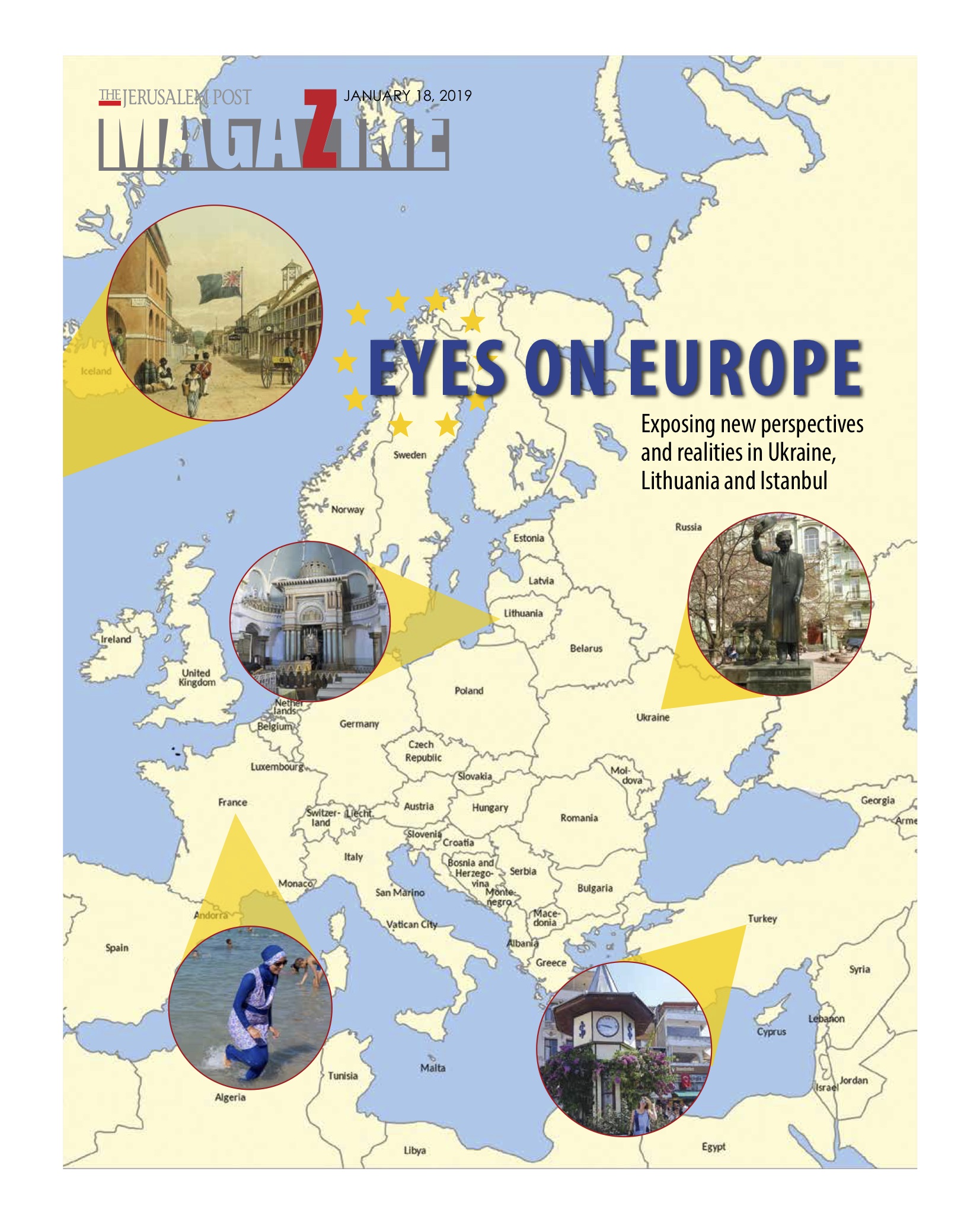
Related. Jerusalem Post Magazine Cover-articles by Gol Kalev:: EUROPE & JERUSALEM



The resurfacing of European Colonialism
Hijacking the Palestinian cause
European opposition to the Jewish state
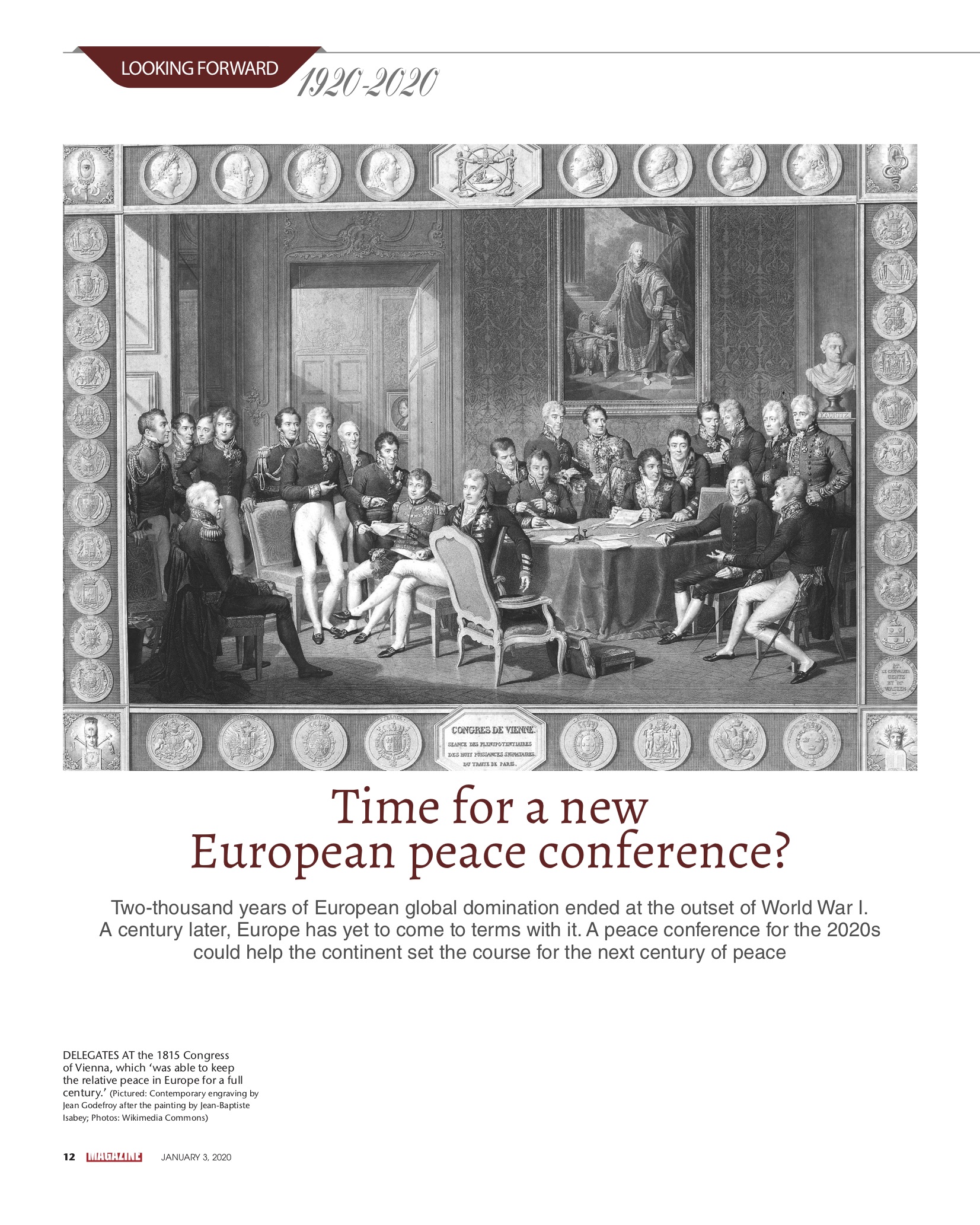
Time for a new European peace conference
Europe should benefit from Herzl’s vision
Related: Applying Herzl’s thinking to today’s issues
Herzl can help solve today’s strategic issues
For inquiries/comments: info@europeandjerusalem.com
Sign-up to our mailing list:


Gol Kalev’s book: Judaism 3.0: Judaism’s Transformation to Zionism

Watch Gol discuss his new book in an i24 interview
Praise for Judaism 3.0
“Gol Kalev does not just know Theodor Herzl – he lives and breathes Theodor Herzl…This book should trigger the conversation the Jewish community needs about Israel, Zionism, Judaism and Identity. Bravo!”
Professor Gil Troy, author – The Zionist Ideas
ייA remarkable ideas book that is about much more than the state of Judaism…One of the most important books about Judaism, Zionism and global trends of our times.”
Catherine Carlton, former Mayor of Menlo Park, Silicon Valley tech entrepreneur
“This book should play an important role in the discussions about the future of world Jewry and its relations with Israel.”
Natan Sharansky, former Chairman of The Jewish Agency, former Deputy Prime Minister of Israel
“Gol Kalev’s book has the merit to transform the very essence of the State of Israel to becoming an objective expression of Jewish identity“
Dr. Georges Yitzhak Weisz, author – Theodor Herzl: A New Reading
“This book has sparked as much conversation as it has because the premise is so interesting, so counter-intuitive and demand of us that we think many thing anew. That is perhaps the greatest gift a book can give.”
Dr. Daniel Gordis, author – We Stand Divided
“Fresh new thinking about the relationship between Judaism and Israel. Kalev picks up where Herzl left off…A must read for people of all religious and political backgrounds who want to get a deeper understanding of the state of Zionism and Judaism today.”
Fleur Hassan-Nahoum, Deputy Mayor of Jerusalem
“A courageous thesis that must be part of any serious discussion of the future of Israel and the Jewish people.”
Michael Oren, historian, former ambassador of Israel to the United States
About the Author: Gol Kalev is a former Wall Street investment banker who has been researching Herzl and Zionism. Growing up in Tel Aviv and serving in the Israeli army, he then lived in New York and now resides in Jerusalem. He also spent time in various European cities and has traveled through both the American and European countryside, learning about contrasting world-views.
He is chairman of The AIFL Think Tank, which explores Zionism and Judaism, and has been writing analysis articles about Zionism, Europe, and global affairs for the Jerusalem Post, Jerusalem Report, Israel Hayom, The Daily Wire, The Media Line, Newsweek and Foreign Policy.
He has been praised for his unique understanding of Judaism by people throughout the political and religious spectrum. In this book, he delivers the state of Judaism as he sees it: Zionism as the anchor of Judaism.
Visit the Judaism 3.0 website: Judaism-Zionism.com
Mazo publishing is offering organizations and companies who wish to purchase 100 copies or more, a special edition of Judaism 3.0 with a dedication page. For information:
 Europe and Jerusalem